Whether in distant oceans or in the field next door: (micro)plastics are everywhere. This leads to problems, because the accumulation of plastics in the soil could damage plant growth and soil organisms. The dilemma for farmers: They need good soil, but partly contribute to plastic pollution themselves. This is where the NewHyPe project comes in. The research team is developing biodegradable substitutes for plastic-based mulch films.
In Germany, 19,000 tons of plastic end up in agricultural soils every year, about 13,000 tons of which come from agriculture itself. Fertilizers such as sewage sludge contain tiny plastic particles and are responsible for the lion's share, more than 8,000 tons, of plastic pollution.
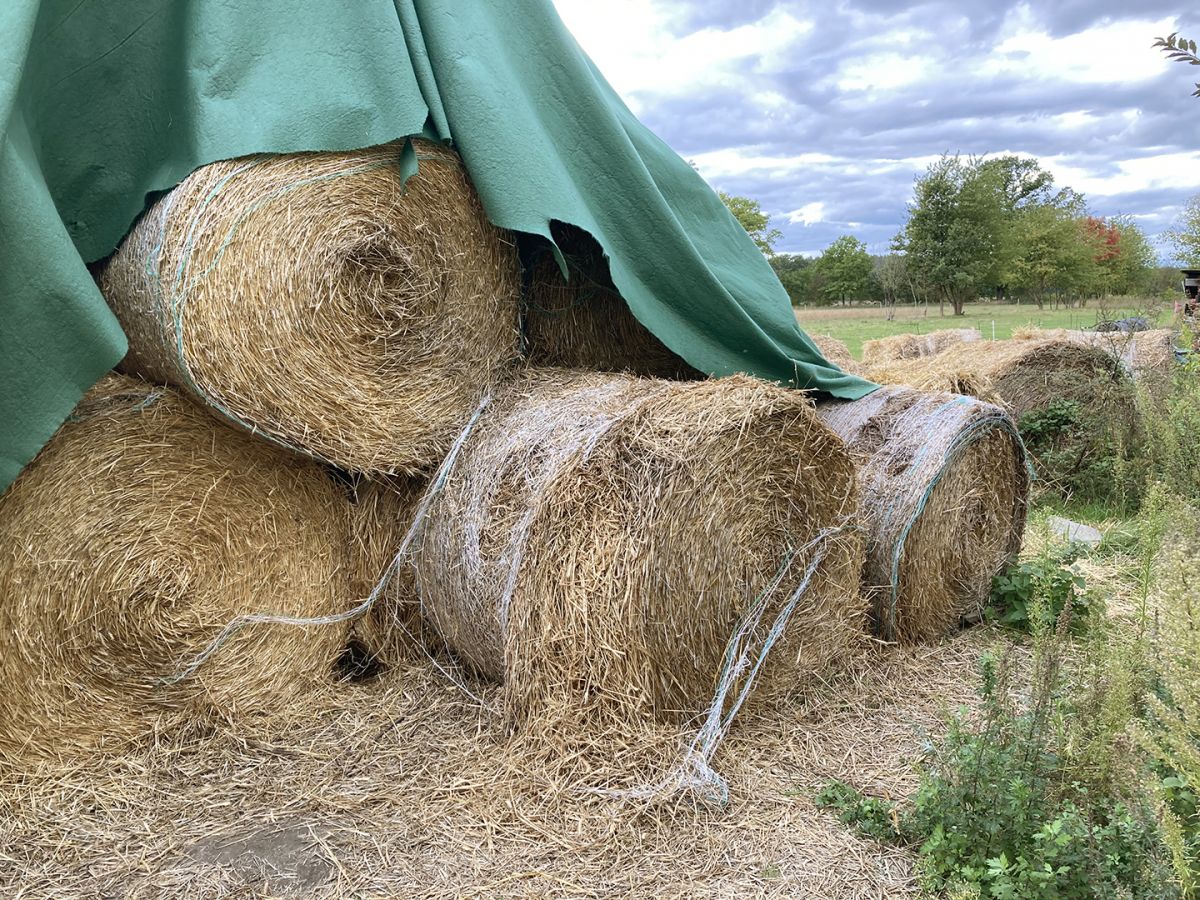
Plastic in agriculture: Straw bales are often tied with harvesting twine to keep them in shape and fix.
Image Credit: © NABU/Katharina Istel
But parts of protective films also remain in the fields after harvesting, and even seeds and chemical fertilizers are in some cases coated in plastic. Since soil organisms cannot break down microplastics or can only break down them very slowly, they accumulate in the soil. What does this mean for farmers?
Plastic: Curse and blessing for agriculture
The consequences of a high concentration of plastics have not yet been sufficiently researched. However, a study commissioned by NABU estimates that soils with a plastic content of 0.1 percent or more lose their economic value. Further studies confirm the concern: high concentrations of plastic affect soil quality, disrupt plant growth and perhaps damage soil organisms. Microplastics can even be absorbed by the plants via the roots.
Should plastic therefore be completely banned from agriculture? No, because some plastic-based aids are also quite useful from an environmental point of view. For example, farmers use mulch films made of plastics to cover their fields and beds. Fewer weeds grow here, the temperature and humidity of the soil can be controlled and the growth phases of the plants can be extended. An extra plus: Farmers can reduce the use of pesticides.
Sustainable mulch papers could replace plastic products
In order to reduce microplastic pollution in the fields, farmers are receiving support from research. The NewHyPe project is developing biodegradable alternatives to petroleum-based mulch films.
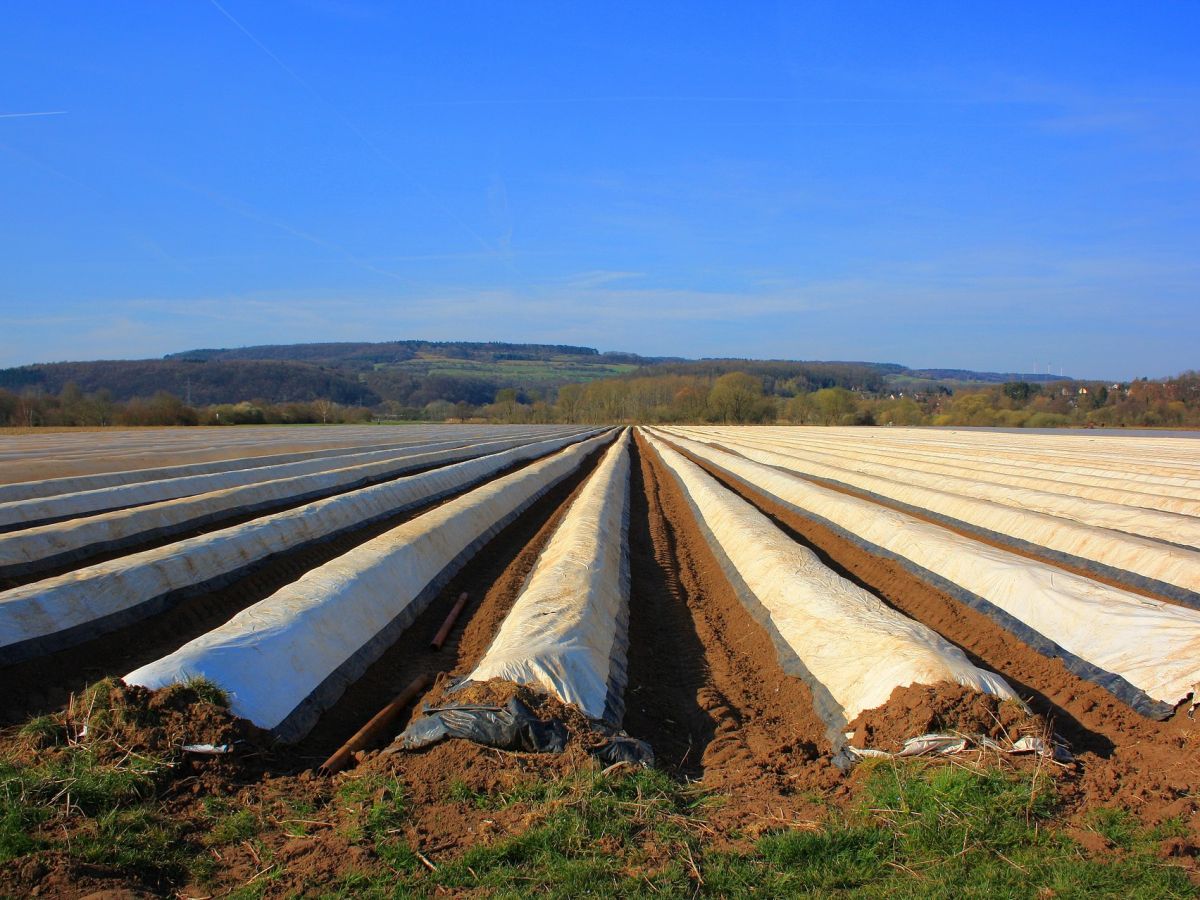
Mulch film in asparagus cultivation.
Image Credit: © Günther Schneider / Pixabay
The sustainable product is based on fully compostable cellulose paper. A degradable, hybrid polymer coating is intended to make the mulch paper stable and weatherproof. This means that it can survive an entire growing season without falling apart prematurely. After harvesting, however, it decomposes without leaving any residue. At the same time, the researchers are working on a coating-free hybrid mulch paper.
"Compostable paper instead of plastic films would make an important contribution to environmental protection," explains Dr. Klaus Rose from the project partner Fraunhofer Institute for Silicate Research (ISC).
The first test results of the compostable mulch paper are promising. Now it remains to be investigated how these paper films prove themselves in practice.
Source:
Bertling, J., Zimmermann, T. and Rödig, L. (2021): Plastics in the environment: Emissions in agricultural soils. Oberhausen: Fraunhofer UMSICHT, (May 2021), DOI: 10.24406/umsicht-n-633611.
For further reading:
- Using waste sensibly - Green alternatives for plastic and basic chemicals
- Recycling under UV light - A bio-based plastic recycles itself
Frontispiece: Farmers use mulch films to control soil temperature and evaporation, as well as to slow down weed growth. In this way, growing seasons can be extended, pesticides can be reduced and crop yields can be increased. (Image source: © Wolfgang Eckert / Pixabay)
Post a Comment for "Did you know? Too much plastic in the fields "